INPUT / 01
t₀ → t₁ → t₂
Observe
Work with measurable signals and evolving states. Ground the interface in actual datasets rather than invented statistics.
EARTH DATA / TEMPORAL SIGNALSWORLD INTELLIGENCE / 001
An exploration of how intelligent systems can observe, simulate, and reason about the physical world. From motion and contact to the signals shaping our planet.
01 / THE PLATFORM
World modeling begins with a simple idea: a system should represent how things change, not just what they look like in a single frame.
Work with measurable signals and evolving states. Ground the interface in actual datasets rather than invented statistics.
EARTH DATA / TEMPORAL SIGNALSAlter initial conditions and physical parameters. Test what changes when the environment behaves differently.
DYNAMICS / INTERACTIVE LABCompare trajectories, inspect trends, and make the limitations of each modeling approach visible.
TRANSPARENCY / VALIDATION02 / WORLD LAB · EXPERIMENT 001
A live, browser-based rigid-body experiment. Drag objects, launch new bodies, and adjust environmental forces to observe what happens next.
This is a simplified, procedural 2D physics demonstrator—not a trained generative AI world model, a calibrated scientific simulator, or a prediction service. Units for controls are illustrative.
03 / EARTH SIGNALS · LIVE INPUT
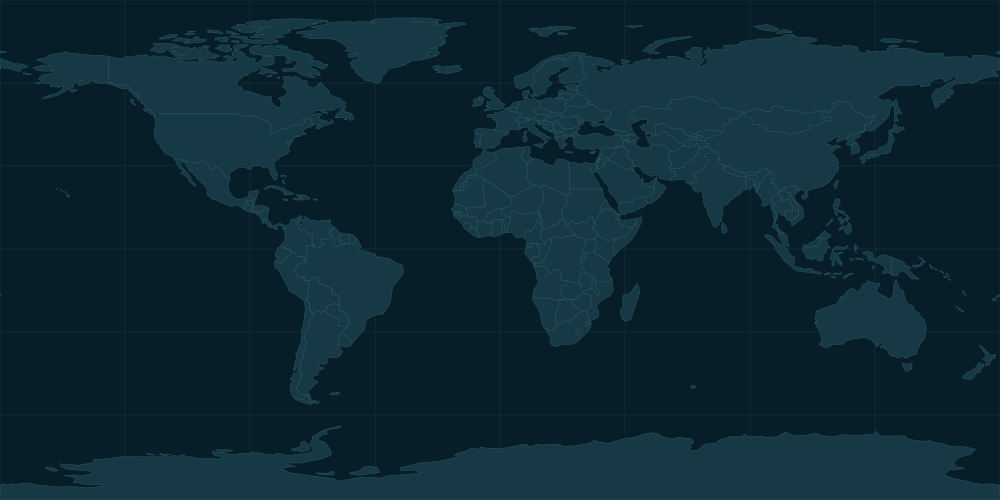
Real earthquake events, mapped from the United States Geological Survey's public GeoJSON feed. Explore magnitude, location, and depth without leaving the page.
04 / DATA ATLAS · LONGITUDINAL SERIES
A historical lens on global change, using the World Bank's World Development Indicators API. Compare places and switch metrics directly.
05 / RESEARCH DIRECTION
Our conceptual research map connects three challenges that make world models compelling—and difficult—to build.
A world model should capture transitions: an object's movement after a force, a scene's evolution through time, or the consequences of an action. The challenge is to build internal representations that remain useful beyond the examples first observed.
Represent a world through sequences instead of disconnected images.
Reason about how interventions change the next possible state.
Separate measured phenomena, simplified physics, and unvalidated hypotheses.
Tervixa is presented here as an exploratory project and design concept. The site does not claim a deployed foundation model, proprietary training results, published benchmarks, or commercial customer deployments. The interactive lab is a procedural demonstration; Earth Signals and Data Atlas display external public data.
06 / ABOUT TERVIXA
Tervixa explores the intersection of spatial reasoning, dynamical systems, and open-world observation. This site is a first public-facing concept for explaining those ideas through things people can actually inspect and manipulate.
Planned public address: contact@tervixa.one. Mail delivery will not work until the domain's email service is configured.